What’s The Story You’re Sharing? The Perspective Of A Filmmaker | 094
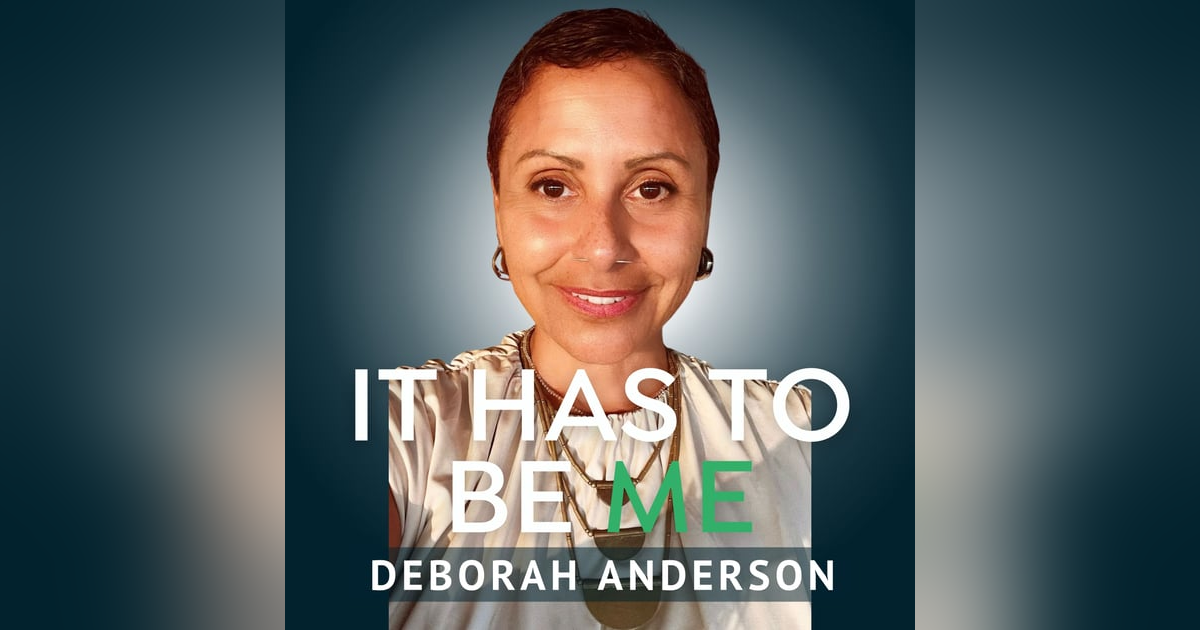


We explore the value of storytelling and amplifying other voices with photographer and filmmaker Deborah Anderson.
She takes us back to her childhood, and her father’s ability to captivate her with stories. Inspired by his work as a musician, she sang on his albums and performed at the Royal Albert Hall before she was 10. This early imprint shaped how she sees creativity: an organic weaving of stories in various mediums.
Deborah leads us through the labyrinth of her career, from breaking out with solo albums, to collaborations with DJ Shadow, to clothing design in London and Paris, and then into photography. When a craftsman who’d developed film for a legendary photographer recognized her work, something clicked, and she saw her path was in capturing images of people.
Planning a portrait exhibition at the Leica gallery in Los Angeles led her to South Dakota. She spent months with Lakota women and made the documentary Women of the White Buffalo. What had begun as a photo show became a divine detour, with Deborah traveling and interviewing women from indigenous communities worldwide for her latest project, The Lost Language Of Her.
Listening to elders who speak the language of spirit and nature we safeguard feminine wisdom and legacy. Through this shared storytelling, we connect in ways that transcend language and culture.
Deborah’s story reminds us that it’s not a straight path or a solo journey. And sometimes, It Has To Be Me is really It Has To Be Them.
TESS’S TAKEAWAYS
- Provoking thought and moving us into action, art can be a messenger of change.
- Creativity in any medium has a common thread—the artist’s perspective.
- The expectation that art is selfless negates the inevitability of perspective.
- Admitting there will be perspective enables celebration of multiple perspectives.
- Ancient and indigenous stories connect us with spirit, nature, and the divine feminine.
- Self-doubt is intrinsically feminine, and pushes us to go beyond where we’ve been.
- Lean into your dynamism. Trust in the magic of your offer.
- Trust in your capability, and never stop refining your craft.
ABOUT DEBORAH ANDERSON
Filmmaker and photographer Deborah Anderson has spent the last decade amplifying the voices of women and indigenous communities, exploring identity, memory, and healing.
Her documentary about Lakota women preserving their culture, Women Of The White Buffalo, received critical acclaim, including Best Feature Documentary film at the Red Nation Film Festival, Best Director of a documentary at the LA Independent Women Film Awards, and four accolades at the Idyllwild International Film Festival. She also champions women’s stories in the feature Aroused and the short films My Revolution with Eve Ensler and Rosario Dawson and Rise with Thandie Newton for the One Billion Rising organization.
Deborah’s photographs have appeared on covers of albums by Pink and other artists, and been featured in Vogue, Vanity Fair, Rolling Stone, and exhibited around the world, including at the Leica Galleries which hosted her Women Of The White Buffalo portrait series.
The central aim of her work is to bear witness and build bridges, provoking audiences to imagine a more compassionate and connected future.
CONNECT WITH DEBORAH
Website: https://deborahanderson.com/
Website: https://en.wikipedia.org/wiki/Deborah_Anderson
Women Of The White Buffalo: https://womenofthewhitebuffalo.com/
The ORA Pathway: https://theorapathway.com/
My Revolution: https://www.youtube.com/watch?v=tL36jjF6-DI
Instagram: https://www.instagram.com/deborahandersoncreative
LinkedIn: https://www.linkedin.com/in/deborah-anderson-6825b7354/
MEET TESS MASTERS:
Tess Masters is an actor, presenter, health coach, cook, and author of The Blender Girl, The Blender Girl Smoothies, and The Perfect Blend, published by Penguin Random House. She is also the creator of the Skinny60® health programs.
Health tips and recipes by Tess have been featured in the LA Times, Washington Post, InStyle, Prevention, Shape, Glamour, Real Simple, Yoga Journal, Yahoo Health, Hallmark Channel, The Today Show, and many others.
Tess’s magnetic personality, infectious enthusiasm, and down-to-earth approach have made her a go-to personality for people of all dietary stripes who share her conviction that healthy living can be easy and fun. Get delicious recipes at TheBlenderGirl.com.
CONNECT WITH TESS:
Website: https://tessmasters.com/
Podcast: https://ithastobeme.com/
Health Programs: https://www.skinny60.com/
Delicious Recipes: https://www.theblendergirl.com/
Facebook: https://www.facebook.com/theblendergirl/
Instagram: https://www.instagram.com/theblendergirl/
YouTube: https://www.youtube.com/user/theblendergirl
LinkedIn: https://www.linkedin.com/in/tessmasters/
Thanks for listening!
If you enjoyed this conversation and think others would benefit from listening, share this episode. And, please post your comments or questions below. I’d love to hear what you think.
Subscribe to the podcast.
Get automatic updates so you never miss an episode. Subscribe to this show on Apple Podcasts, Stitcher, or your favorite podcast app.
Leave a review on Apple podcasts.
Ratings and reviews from listeners help our podcast rank higher so it can reach more people. Please leave a review on Apple Podcasts.
Oh, Deborah, I loved your documentary, women of the white buffalo. So I just before we really get into this and your life and legacy, I want to ask you where this storytelling cellular need for want of a better expression was birthed in you. You come from a very creative family. When did
Tess Masters:you learn to use your voice and value it and want to tell stories?
Deborah Anderson:Wow, that's it's such a beautiful way to start the conversation, because to me, it's all about storytelling. This idea of why we're here is to create the story, the great story, of our lives, and it's very individual. And I always say to anybody who asks me around the subject or
Deborah Anderson:the nature of photography, and they want tips, or they want ideas or thoughts around how to become a photographer. And I always say, what is the story that you're going to be telling? What is the story that you're going to be sharing? So I think maybe the part of the storyteller is my father, who
Deborah Anderson:not only a musician, and on many levels, you know, sort of global success with his music and his storytelling. He would tell me stories, as I remember growing up about the fairy kingdom, about consciousness, about the unseen realms, and I just couldn't wait for him to come back off tour, so that he would
Deborah Anderson:tuck me into bed and tell me a story. And I think that that's so that's really the beginning of the storytelling. Is he's an amazing storyteller. And, you know, with total respect of his magnitude as an artist, I feel like the Apple didn't fall very far. It's something that I gravitate towards, is as an
Deborah Anderson:artist, is to tell the story that people want to listen to. You know, want to hear.
Tess Masters:So as you were marveling at his ability to tell a story and immersing yourself in this world, when did you claim that you were going to put your voice into the mix.
Deborah Anderson:I don't think, I don't think it was a sort of a Cognizant moment of this is what I must now do. I think it's just the unfolding as an artist is that you're constantly expressing yourself, and for me, I'm just constantly in the weaving of stories through my art, depending on, you know, the
Deborah Anderson:outlet, because it's been a journey of many outlets. Yes, you know which it's interesting, because I know someone said to me a while back, the idea of claiming yourself as an artist, to say I'm an artist, is a really big deal. I never thought a different way of my being. I never thought a different my
Deborah Anderson:expressing myself. Let's say it's like I'm an artist. It just felt so part of the fabric of my voice. So there was never a decisive moment that I am doing this. I've just constantly been doing it.
Tess Masters:Let's talk about the outlets then, because there are many, and I'm sure will be many more. So singing you were singing with your father, was that the first outlet where you just felt this creativity flowing through you.
Deborah Anderson:It was just the normal. It was the one that my dad was next door in the studio. It was the one easily, available to me. It was just there always that thing of my Can I sing on your album? Can I sing on your, you know, whatever you're recording? And I think I was just that pushy, little
Deborah Anderson:bright spark, really, of energy that wanted to participate in that creative energy. So I was singing with my dad from the age of eight nine professionally, and he went on tour and I sang live with him. I think it was at the Royal Albert Hall I was age nine, because I'd done a duet with him on his song of seven
Deborah Anderson:album. So there was always this desire to participate with him. It just felt like a natural thing. I think you could ask most children of artists that ultimately, it's so part of the fabric of your everyday there's nothing odd about going into the studio and singing with your dad, you know, having him sit on
Deborah Anderson:the piano and be like, come sit next to me and let's sing a song on a constant basis. And then there's that piece of watching him perform. So you're constantly being given this understanding that it's okay to do this, it's okay to be an artist, seen, it's okay to be creative, it's okay to expand
Deborah Anderson:and express and be in that space. With no like, well, what is it that you're going to be when you're a grown up? You know? You should be a doctor. That was never part of the fabric. It was, Oh, so you're clearly an artist, you know, and you're clearly creative. So you're just rifting off of that
Deborah Anderson:frequency of Express, expressing yourself. So to me, it was like, This is my expression. I am an artist. It was clear from from early on, and then there were many different I wanted to be a singer at that point, after singing on many of my dad's albums, and age 16, I think I created my first demo. And dad
Deborah Anderson:was not impressed. He was not impressed. He asked me if I was taking me so what drugs are we taking? I don't think it told anybody that story, devastated, devastated. I, you know, I poured my heart and then he had me listen to Ricky Lee Jones and Joni Mitchell and other various Joni Mitchell to develop myself.
Deborah Anderson:Listen to these song writers, these song stress, these, you know, the the way in which they curate their harmonies and the melodies and the vocal tones, and then, of course, the lyrics and, yeah, it changes everything. So it's not just because you're close energy that you are to be, that it's well,
Deborah Anderson:no, you have to develop your skill, you have to develop your ability to do this. And this is a craft that will take the 10,000 hours that it takes to become good at. So when I realized there was more to it than just having it be so accessible, there was the I even have the talent to do this. You
Deborah Anderson:know, do I really have the ability? And that's, I think, why I was able to step into so many sort of parts of my creative being that my dad never said no, my mom never said no. It was always like, do who you are. And that's, you know, then you sort of generate that path for yourself, and that's when it
Deborah Anderson:either works or it doesn't, you know,
Tess Masters:it seems also that they were helping you strive for excellence and ask questions and and listen deeply, this deep listening and reverence for the quality and the and the vibration of things that is so integral to your work now was instilled in you early on. That's what I'm hearing when I
Tess Masters:when I you know what's interesting?
Deborah Anderson:I think, if anything, that comes from wanting to be as good as my dad. It was never that they instilled that in me. It's that thing of he's so good at this I need to be really good at what I do, because there's this constant, Oh, you're so and so's daughter, or your so and so's, you know,
Deborah Anderson:part of this family, this creative family. And I just wanted to be sure that if I'm going to do this and I'm really good at it, so that wasn't, there was no room for because I'm the daughter of I then get free hall pass. You don't. It doesn't work like that. I've seen many iterations of it. The
Deborah Anderson:real talent is that coming within and the listening and that has taken me years to fully form itself and become within me that I can trust in who I am and what I do. So that wasn't them. It was all me, wanting to impress them, or there was a lot of eyes on me because of it.
Tess Masters:So how did you then interpret when he said, what drugs are you on? What are you doing? Here go and listen to Joni Mitchell. Listen to the way that they're weaving, you know, through things. How did you then interpret it, if you weren't interpreting it as an invitation to be better.
Deborah Anderson:I just, well, you sort of go, there's a lot of work ahead. You come from a very different storytelling, you know, a different timeline as well. You know, we're talking about the time that I started to drop into music, you know, releasing and getting signed and whatnot was in the late 90s,
Deborah Anderson:there was a lot of drum and bass music coming out, and that scene in London was very specific. And I kind of fell into something with this artist called Alex Reese, where they gave me this drum and bass track, and I sang what I know I'd sung so much over my dad's stuff over the years, and then it was kind of
Deborah Anderson:the birth of this new way in which Drum and Bass was interpreted with song with a proper lyrical, melodic song on top of it. And that song did very, very well, and was a big part of the scene, the dance scene in Europe and in England, and that it was kind of, I fell into that, and then I got
Deborah Anderson:signed, and then it was this, then you start developing what I think that's the piece that's really important to say, is that, you know, we try, we jump into these ideas of being creative and wanting to be an artist. And then there's. Defining what is your voice. It goes back to what's the story
Deborah Anderson:you're telling. And at the time, I was so young, I loved Bjork. I loved all these different artists that sound York. She has her sound. It's so Bjork, as she would be known as Bjork. And I felt that I didn't know what my sound was. And that's when I sort of veered into moving into photography and clothing, and
Deborah Anderson:started to create I was wearing the clothes that I was making for the photo shoots for my album material and the record label that I was signed to A and M Records folded and had a huge hit with feel the sunshine, and I was working with these amazing off, pieced Drum and Bass artists and just cool
Deborah Anderson:collaborations with DJ Shadow and various Japanese, Japanese artists and such, because I was signed to mo wax through A and M, but because they folded, and there was this, then just a lot of confusion, I sort of stepped away and focused in on the clothing line, because everyone kept saying, Well, what you're
Deborah Anderson:wearing is amazing. And I just didn't know if I had it as the singer. And I was okay, I'm going to now express myself as this seamstress and creator of clothes. And that became this massive movement because I started to work with vintage clothing. And I will say, The Times newspaper in England, they
Deborah Anderson:quoted that I was the beginning of that movement, that I had created something because I was selling these beautiful dresses from the 20s and 30s, slip dresses, hand dyeing them, hand embellishing them with these velvet flowers. And the next minute, Helena Christensen, or Mini Driver, who I grew up with,
Deborah Anderson:was wearing my pieces. Gosh, many, many. I mean, there was many. You know, Vogue was picking up on these. It suddenly became this movement, and I was selling my dresses to Harrods in London, Maria Louisa in Paris, to these like, I think I had eight doors, Bergdorf Goodman in New York, and I couldn't keep up
Deborah Anderson:with the demand, and I didn't have the finance backing. But then I was like, I want to be a clothing designer. This is what I want to do. It went too quickly. It grew too fast, and I wasn't able to keep up with and I had no business sense around it, and I had no backup financially from other bigger
Deborah Anderson:companies. And so I saw it fall apart because I couldn't meet the demand. And it broke my heart, because I loved I loved that. But in the meantime, I was taking photos of my pieces, these 1920s dresses with these models, slightly sort of half naked, half dressed, half and I kind of got into this erotic
Deborah Anderson:space. I moved to Paris, and I said, Oh, I want to do photography. I fell in love with the work of Paolo reversi. And, you know, of course, Helmut Newton was big fan. And then I saw that this was a very white male dominant space. And yet I was really clear that I wanted to somehow, you know, somehow
Deborah Anderson:find the space that I could submerge myself into and create my own little energy as a woman of color, as a photographer, and living in Paris, and it was impossible. It was the hardest thing to try and get jobs. I saw people because I did a lot of photo shoots with a lot of the model agencies as I my craft,
Deborah Anderson:you know, really became my heart. I was like, Wait, this is fantastic. I can pick up my camera and I can take these photos and I can hand them over the next day. I don't have to spend hours and hours in the studio trying to record an album, and, you know, months later maybe having something
Deborah Anderson:that we love. I don't have to spend, you know, months and months creating a clothing line and then having to produce this. I can take photos and I can hand them in. Then it just, it just, it was just a different frequency, and the piece that stuck in that moment of, I have something here, and actually
Deborah Anderson:this is what I want to do, and really make, make this into my career. I believe I was 31 so, you know, two years ago? No, I'm kidding. I was 3132 years of age, and I was living in Paris, and I took a whole bunch of photos using some of the clothes that I had left from my clothing line, and I went to have the
Deborah Anderson:film developed in this little boutique film development shop. And I went back the next day, and the man working behind the counter said the owner of the shop would like to meet with you. And I was like, oh, okay, and sure. And this old Diddy man came out and looked like he was in his early 80s, and he had all
Deborah Anderson:my contact sheets, and he. And he said, Ah, you're Deborah. And I said, Yes, nice to meet you. This is your shop. Thank you so much. You know, you develop all my things. I'm I'm just sort of getting into this photography, and I love it. He says, No, but you have something. And he pulled out my my tear sheets,
Deborah Anderson:and he started pointing at the photos that, in his mind, were unique and they worked. He said, this, this is your style. This is your light. This is and I was like, wow. Okay, thank you. Later to find out that he was Henri Cartier Bresson's personal developer of all of his work, all that beautiful street
Deborah Anderson:photography that was the basis of a lot of Lacher storytelling. Yes, a lot several other beautiful photographers, male photographers who have done work that we all love and know is iconic photos. So this man had worked with these photographers and had been helping them select, and, you know, print a
Deborah Anderson:lot of this iconic imagery. And I got to meet him just they would say, by as it, as it, you know, by mistake, or by
Tess Masters:as it was mine intervention by the gods, I would say.
Deborah Anderson:And he said, you have something go, go forth, kind of thing. And that was really the beginning of me going, Yeah, I this is, I can do this. I can, I can carve my niche with this. And it's taken 18 years, you know, 20 years to redevelop that. That voice is that, and it didn't mean that I
Deborah Anderson:was working the whole time, because, again, it's a very white, male dominated space. However, I still feel that that was a passion that I'm really glad that I found and have continued.
Tess Masters:When did you stop needing the permission from somebody else to say you've got something
Deborah Anderson:about five minutes ago, are you and me both? Isn't that an ever isn't that an ever evolving for us?
Tess Masters:Right? I think you are. Thank you for being transparent about that, because it is an evolving journey with that where you trust yourself and then you doubt yourself. I think that that dance between between self trust and self doubt is NE is a necessary part of creativity.
Deborah Anderson:I'm going through it now. I'm about to travel around the world to take a film of these indigenous peoples, and I had meltdown this morning, of like I'm having anxiety, because I recognize the enormity of the responsibility, and then I have doubt about my talent, and I have doubt about
Deborah Anderson:my capability, and I'm traveling on my own will my camera work. You know, God bless Lacher, and you know, generously have gifted me a couple of cameras to work with, but there's that moment that you're just in doubt, that the you know you're always going to be met with that moment. And I think that is what brings the
Deborah Anderson:best work, because you're always striving for something beyond what you've just done. How can I make I just did a shoot two days ago. Here I'm in Costa Rica with a private client, and the day before, I could feel all that energy again, like, will I get it right? Will I be so I don't think there's ever that moment
Deborah Anderson:of, I don't need anyone's approval. I think as an artist, you always want that moment of, you did a good job and you're like I did. Maybe it's the five year old in you. It's the it's the one that wanted to please or it's that one that was in self doubt. I think there's always having to nurture that part of
Deborah Anderson:our being, of you've got this,
Tess Masters:oh, it's bringing up something as I'm listening to you in in how we see permission versus validation, acknowledgement, and are they the same thing? Are they sitting in the same sphere? No, they're not.
Deborah Anderson:Because actually, as you say, that I don't need permission. Permission is not my thing. I think it's more, it's the other, it's the it's not like, yeah, I permission is definitely not a thing, because I feel like I'm constantly in that space of evolving my desire to create and
Deborah Anderson:express. So I don't ask permission from anybody to do that. I think there's still that am I doing it well? Is, is this? You know this, this approval piece. I think we're still as women, looking for those spaces to fill, to be seen in, to be heard without it looking like a rant or a, you know, a piece
Deborah Anderson:where it's like women trying to find their space. Now, our space is very much here, and it always has been. It's more about being seen in that space, if that makes sense,
Tess Masters:it does so is that the driving force behind why so much of your work, not all of your work, but so much of your work, is amplifying the resonance of women, the unique medicine and wisdom of women.
Deborah Anderson:Yeah, it's so funny, I don't even think it's a. Conscious thing. I just don't I, I feel that it's something that comes into my sphere. Everything comes through us, right? So ideas, they're all born through a dream meditation, taking that walk in nature, that idea comes through. And for me,
Deborah Anderson:it's just that this is something I enjoy holding. It's not something that I am purposely looking to do so that I can give that voice to those women. It even like with aroused having done that project, which was about women in the adult film industry, it wasn't about must give them a voice, must make
Deborah Anderson:them look good. It was just, oh, this would be interesting. I wonder if I can shift the gaze. I wonder if I can bring a different angle to this specific work, you know, because it looks like this, but I see it like this. And to go to sit with the Lakota women. It wasn't like they must have their voices
Deborah Anderson:heard. I just went. I would like to hear what they have to say. I wonder what it is to be a modern day Native American Indian woman, and so you go in with that, rather than a need to capture their voice.
Tess Masters:Let's talk about how that came about, because that really was from a dream, from, you know, from a divine gift, so to speak, take us inside of that journey to making women of the white buffalo.
Deborah Anderson:Yeah. In short, it's this idea that you get given an opportunity, and then you wonder how you're going to fill this opportunity. And the opportunity was to have a show at the Lacher gallery in Los Angeles. So Paris Chong, who runs that gallery, invited me to do a show because Julian Lennon,
Deborah Anderson:who's an old friend, had done a show. And I said to Jules, I was like, Jules, please introduce me to the I'd love to do a show with Laika. I would love to be representing Laika. It's just like a dream to to be a part of that family. And she he introduced me to Paris, who we got on immediate fast fast
Deborah Anderson:friends. She's brilliant and hilarious. And we had a great dinner. And she said, We need voices like yours. We need more women of color. We need more women. So what have you got? And I was like, I'll get back to you with that. And I What do I like? What's the story I want to share? I was living in Idlewild
Deborah Anderson:up in the California mountains. I go down to the Leica store because I want to buy a Laika camera. There's a there's a Leica, one of the Leica stores, and I get talking to the guy behind the counter and show me some cameras, just to get an idea of what does it look like to to use these cameras. A woman
Deborah Anderson:is in there. She's talking about these wild mustangs on Indian Territory. I don't even know where she was talking about with she mentioned South Dakota, but it was the wild mustangs and Indian and I was my head just started doing like, Oh, this is interesting. This could be an idea. And I drove home, and as I
Deborah Anderson:drove up the mountain, I went past an Indian reservation, Santa Rosa, which I'd never looked at this I'd only lived there for about six weeks, so granted, I'd only driven past a couple times, but I suddenly see this sign. I google Native American Indian woman, and what comes back is that they are
Deborah Anderson:being murdered. They are going missing. That romanticized idea of what an Indian woman looked like dissipated within seconds and it was It all happened so quickly. I realized at that moment I wanted to document that. What does that look like? What are they doing? What do they look like? What it just so
Deborah Anderson:I called someone that I knew, that I'd worked with through some of the sort of, let's say, meditative spaces with unseen realms and Spirit work and such. I've always been very interested in the unseen and various other things that consciousness really, you know, what is this? What is it that we're really
Deborah Anderson:experiencing here as humans? Um, sort of every level of that. And she knew somebody that had been on the Indian Reservation in South Dakota, connected me with this woman, and literally within, I'm going to say, kid you not, six weeks from that thought, as I was driving home, I'm now sitting on the sofa of
Deborah Anderson:Carol Ayn rope Herrera in COTA in Pine Ridge on the the poorest reservation, or the poorest county in America, and I'm beginning to make this film. I mean, of course, of course, there was little things in between, but it just fell so quickly into a yes, this is what you should be doing. And within
Deborah Anderson:two months I'd filmed the first segment. I created this image of della Sina chief eagle with the red
Unknown:handprint, yeah, that went viral.
Deborah Anderson:Went viral, and I suddenly realized. Noticed that I understood what was necessary to do with this film in order to bring the type of awareness that was necessary in art form. Because I truly believe that art heals, and art is the greatest messenger of story. And, you know, change and
Deborah Anderson:all of the pieces, I think art is a great way to allow people to interpret as they wish, what you know, what moves them to action. Art, when done well, can really open up that, that space for people to step into and connect to stories that are hard to look at. And I realized that this was a really hard one. So I
Deborah Anderson:spent three, four years until the day that it was released after covid, because covid happened in between all of it. And I was back and forth. I was going to the reservation, I was dropping off clothes and food and toilet paper and all the things that were needed during covid. And finally the film came
Deborah Anderson:out, and it was like giving birth, and I have not had children, so not that I would know, but I I felt hung over once the film had come out, because I was carrying such a weight, and I didn't realize the enormity test until the day that I released the film of what I was releasing out into the
Deborah Anderson:world.
Unknown:Well, it is, is it?
Tess Masters:I would describe it as an exquisitely brutal offering in that it is a beautifully made film about something that is so incredibly important. It touched my heart deeply, but it also disturbed me, you know, the the reality of the desecration or the devastation of of this beautiful
Tess Masters:culture and these people, and it brought it close to home, and I felt, As I was watching it just an invitation to remember who I am as a woman, who my fellow women are as women, and the importance of preserving what we offer and the unique medicine. As I was saying before, I want to ask you about what you were
Tess Masters:talking about before, which is, whenever you do a job, you get nervous, am I going to do it well, am I going to hold it? Am I going to do it justice? And so forth. What was it like, even though you had this deep calling, and it was a full bodied Yes, to go into an indigenous, indigenous
Tess Masters:community, a sacred community with with Carol, you know, a giant in that community, as a non Native American, even though you are of Indian Scottish, English, you know, black. I mean, you have all of this. You know, you are a woman of color, but you are not of them, and yet, at the same time, you are
Tess Masters:of them, as we know, but, but what was that like? You know, they are, it seems maybe this is a misconception that I need to shift in my mind. But to me, I would imagine that they want to be the custodians of their story and their legacy. How did they welcome you in what was that journey like for you?
Deborah Anderson:I think a part of me was terrified, terrified. I was like, What am I doing? And then a part of me was like, Why will my doing this help? How will this support them? Because it's so big you're talking about, you know, 535 years of genocide, yes, a history that is just layered, layered, and
Deborah Anderson:people who are very well known. You know, there are over 700 tribes in the United States with key management, over 700 languages and ways of practicing their their traditions. And here I am with one of the most known of that 700 or more. I didn't realize how big a responsibility it really was until I started to
Deborah Anderson:make it. And I got home the first time, and I was like, oh my god, what am I doing? You know, really felt like that. And then I realized that ultimately, their story is all indigenous people's stories. Yes, this isn't just their story. This is a mirror to the rest of the world. So when I could
Deborah Anderson:comprehend that they are not the only ones suffering. And then you look into what's happening with the aboriginals in Australia. You look at what's happening over there in New Zealand. And we talk about these boarding schools, and we talk about what happened with the slavery, with the Africans all
Deborah Anderson:being brought from West Africa to Barbados, which is where I grew up. And then I think about my grandfather, who is West African, Trinidad, you know, Caribbean Indian. I think about all of the displacement of these people's history and story. My story was in there. It wove into this idea that my great
Deborah Anderson:grandfather was also African. Who was displaced from Africa to on my mum's side to England, and so you're just like all of these things, and the history of the abuse within my own family, and why it's all of our stories we're in
Unknown:this sort of yes,
Deborah Anderson:I want to say, you know, and I really want to be mindful to say that I personally have my own story that is not like theirs, yet it is in my ancestral lineage. And there's something in that that I wanted to make right? I wanted to give the voices to my ancestors by way of this film.
Deborah Anderson:So in showing up and then being like, Hmm, so why are you here? And then they look behind my back and they say, my they see that my crew is only the four of us, and we're all from different parts of the world. And, you know, I had someone, what my cinematographer, with my DP, actually, fantastic, man from
Deborah Anderson:South America. There was, there was just like a mixture, a mixture of people. Kimiko is from Japan. Another had Scottish heritage, and myself, that was really it. And Matt being American, with mixed heritage as well, from Europe. We're all of mixed blood. We're all from different parts of the world.
Deborah Anderson:But I was a very small crew, and I wasn't coming with a huge fanfare of you know, I've got a big conglomerate behind me with tons of money, and we're coming to farm your stories. I genuinely came in saying, I there's a calling, and I'm here, and I have my microphone, and I'm willing to share your story
Deborah Anderson:in the best way that I can, as someone who understands film and storytelling, and their response was, we've been waiting for you. And that was it. That kind of shifted. And they tested me along the way. They brought me into ceremony. They questioned why I was there. I went into council meetings. Had it been
Deborah Anderson:150 years ago, I'd have been walking into the teepee, and they would have been sitting me in front of the elders, which they did, in a very different visual, because we were in, you know, back and beyond minus 20 degrees, in a tin can of a trailer with a fireplace that barely has enough wood to keep
Deborah Anderson:everybody warm, as they're snuggling in their big, you Know, coats and hats and, you know, scarves, and it would have been blankets and more feathers and more, you know, fire, camp, fire type energy 150 years ago. So, but it was the same sentiment. Why are you here? What is it that you why? Why?
Deborah Anderson:Why are you amongst our people? And because Carol iron, rip Herrera, who first brought me in, accepted me as family. She said, Sister, this takes years to encourage. She gave me these earrings, of these that she'd she'd made these feathered earrings with dream catchers. And she said, I gift you these,
Deborah Anderson:these earrings as a gift, which is a way in which they bring you into the family, is by stating that that's what I'm now calling you. But there's a ceremony around that, and then there's an exchange of gifts. And it happened really, really quickly, because she said, We don't have much time, and she died, yes,
Deborah Anderson:three years later. So it's that idea that she somehow in there, knew that her time was short, and she helped me make this film. So it was very once she had told the people my sister here why I was accepted. I'll give you the two second story of driving with her to ceremony. I'd been there all of three
Deborah Anderson:days, and it's dawn, and the morning star is there, and she's speaking away in English to me as I'm driving her to the ceremonial grounds. Carol I'm rip was not that old when she passed at the time 68 or 67 when we were talking. And the morning star comes up, and she sees it, and she's like, ah, and she
Deborah Anderson:closes her eyes, and she starts praying in Lakota, I'd never heard the language. It's just me and her in the car, and I just burst into tears. It's this moment of I understood everything, and I it's like I'd heard the language before. And she finished her prayer. And we got to the the grounds, and we
Deborah Anderson:stepped inside, and everyone had been taking peyote throughout the night for a ceremony for one of the brothers who had cancer, Carol's brother who had cancer. We sat down, and after an hour or so, they broke the ceremony by eating with drumming. They have the water drum, and I'm sitting next to Carol, and Carol
Deborah Anderson:starts to speak. She's a revered elder, and she said, I want to introduce you to my sister here, who just drove with me to the ceremony. And when that morning star came up and I started to. Eat the morning prayer. She cried tears for all of you, makes me not to cry. But it was that moment that was the
Deborah Anderson:acceptance, that was the moment of so you will you. You will welcome her in I trust her. I see who she is, and that was the beginning of the journey.
Unknown:Oh, so it's hard.
Deborah Anderson:It's heartfelt. It's not coming in with ego. It's humility. It's I see you. It's I'm not here to prove anything. I mean, I was, I was scared. You know, you sit with these beautiful people for the first time, and you get to hear that song and the beating of the drum, and they're sitting
Deborah Anderson:in prayer, and they're fanning you with that sage. And you're on their land. You're no longer in America, you're you're in Lakota territory, a whole other world. So it was, it was day by day. I took it day by day, but we prayed a lot. There was a lot of prayer involved.
Unknown:Mm, so
Tess Masters:as you continue this journey of helping these indigenous cultures have more of a voice through art, through the lens of you and your creativity and your perspective, so that we can watch you know it through your lens. Take me inside the evolution of this latest project, of the lost language,
Tess Masters:of her deciding that you were going to to use your word from before riff off or expand into or pray with, or you know, however we want to think about it, in terms of language, even though it transcends language in many ways, this sense of spirit and holding spirit and legacy and generational humanity that
Tess Masters:you just decided I'm going to Take two cameras and collaborate with Lacher and head off on my own and sleep on floors and gather my water and wood, so to speak, not really knowing what it's going to be and, quite frankly, not having control of it and being aware of that as we never are in control, even
Tess Masters:though we'd like to think that we are. What was that invitation that you have now taken up to go on this journey around the world?
Deborah Anderson:Firstly, I'm like, as you describe it, I'm like, It's frightening.
Tess Masters:Perhaps I would be terrified. Now I'm
Deborah Anderson:becoming, I've just become because I leave. I leave literally from this moment that we're speaking. I leave in five days from now, and I'm about to do nine weeks of that, sleeping on floors, bathing in rivers as it crosses the gamut, you know, people's houses, spare bedrooms, sofa, whatever it
Deborah Anderson:takes, because at this time, I don't have any financial support to make this happen, and yet these miracles just keep providing me with another step forward. So I've been wanting to make this film for about three years, tentatively called the Lost language of her because of this idea of Mother Earth's
Deborah Anderson:language being lost amongst the most of humanity at this time. It'll, may change. It'll, it'll, it'll probably evolve into something else, like with women of the white buffalo. There was another title when I first went out, and I think it's called the sun dancers or something. And you know, you get out there and
Deborah Anderson:suddenly you're like, oh, wait, all I kept hearing was the story of the White Buffalo Calf Woman. And these women are carrying that strength of remembrance, because that's the story. She hands over this pipe, the sacred pipe, saying, Remember who you are, remember your prayer, you know. So this connection to
Deborah Anderson:spirit. So in a way, I felt that the women from women of the white buffalo is sort of the ones that are saying, Remember who you are, remember the spirit of what it is to be a Lakota woman, the backbone of these communities. So that's why that title kind of evolved into that. With this, it'll probably do the
Deborah Anderson:same thing. We have the idea of wanting to speak to those that still hold her language, the people that still can speak to Mother Earth, that still have the ability to hear her. And then we have it evolved. It started with the women that hold this, this medicine of speaking to Mother Earth. And then I
Deborah Anderson:realized that that isn't the film. The film is actually Mother Earth. It's a transmission from her. And as you're creating any of these stories, you know, as you're letting them show you, you know, they start weaving that path. I just kept listening. I'm going, Yeah, it's actually it's not
Deborah Anderson:about women who hold the medicine. It's about Mother Earth. It's about Mother Earth. And she just kept speaking to me. I walk through the jungle, I walk through the forests. I go to the ocean. I. Lie in the water. I'm always speaking to the elements. I'm always in gratitude and thanking these
Deborah Anderson:elements for holding me and supporting me. And then I started to hear Zach Bush, Dr Zach Bush, who is, you know, he's known for many different sort of, I'm going to say, chapters over the past couple of years, whether it's the covid, energy, you know, vaccination energy, what it is to be in this
Deborah Anderson:human body, energy. And then I start hearing him, what sounds to me like he's channeling Mother Earth. And I just kept hearing his, his, his articulation around Mother Earth, and what it is to be human. And I kept thinking, I think I meant to do the film with him. So I reached out to
Deborah Anderson:his people, his, you know, his support team, and they all knew me from women of the White Buffalo, and they were just like, Okay, this is the timing is incredible. There's something here for the two of you to connect and create around this film. So I met with him some months ago, and it was a full
Deborah Anderson:body yes for him to say, how can we weave this story together? And I said, Well, I'm going to go and I'm going to record all of these indigenous peoples and bring that as some of the offering of this film, to speak to Mother Earth, those that still speak her language as a transmission, rather than
Deborah Anderson:bobbing heads speaking on behalf of and he said, Well, I have this other project that I think you should know about called origin, is to create a prayer for Mother Earth so that we could get a billion people to touch the Earth at the same time. And I said, Well, when that when? When is that
Deborah Anderson:happening? And he said, the end of this year, if we get it together. Meet my creative partner, Chris Decker. I said, Okay, we had that conversation. And Chris said, Well, how many indigenous tribes are you going to be connecting with? And I said, it's not really about the indigenous peoples, per se. It's
Deborah Anderson:I want a little bit here, a little bit there, but it's not about and he said, Well, I would love more voices. How do you feel about going across the planet and meeting with the Australian, the New Zealand, the African, got to Scotland, maybe, maybe go back to the Dakotas. And I was like, I'm in because
Deborah Anderson:and I'm going next week to Colombia to meet with four different tribes, where I'm literally going on donkey to go into the heart of Mother Earth. They say it's the heart of Mother Earth, this specific Apple, the mountains, the sacred mountains. So I'm just like following the lead, the thread
Deborah Anderson:of, it's not so much the why. It just seems like it's an it's like I have no choice. And as I'm now connecting. I had a meeting this morning with a Gaelic, a man who speaks Gaelic, who's connected to that Scottish that that strength of the Scots, the Celtic Warrior energy. This man had me in tears. He's he
Deborah Anderson:sang me a song about the warrior woman. He said, This is you, and you start connecting with these types of people. I'll be, I'll be meeting him when I go to Scotland. And you know, there's a magic, there's a weaving, because these people are the last key holders of this integral part of a language that
Deborah Anderson:connects us to her. So there's something about this opportunity for me to connect with the people that still hold this language, because it is disappearing. The Lakota people had 10,000 people that spoke their language 10 years ago. Now they have like 1500 so this idea of being able to capture some of
Deborah Anderson:the song, some of the language, some of the understanding, and weave it into a story like this. Just, I don't know, in some in some ways, I think, Wow. Really, is it possible to weave such magic into one space and let it be a transmission from mother earth? And the only way that I can say yes, it is, is if I just
Deborah Anderson:keep listening, and it just still feels like a full body, yes. So I'm like, Okay, let's go. And so I'm going, no matter where how it shows up. People are very much wanting to have me come into the fold of their world and gift me whatever is necessary to share that story. So yeah, it's
Tess Masters:sort of bringing us full circle, isn't it about this idea of, what is my story? What is the collective story? What is the remembering? What is your story, someone else's story, and it all weaves together into one tapestry, and we're all coming from source. So as an artist and as a seer and
Tess Masters:as an interpreter, and I know you are going to have interpreters who are literally going to be interpreting language, and yet, just like your story with Carol in the car. You didn't understand the words, but you absolutely understood the language. And so how do you as an artist, when
Tess Masters:you are interviewing somebody, capturing somebody, be clear about the story that you want to be telling without agenda and allowing it to unfold, but at the same time you are crafting of it at the same time, I'm not even sure if that's the right way to ask you this question, so just help me find our way into
Tess Masters:this, because it's something that's been sort of swimming around in my heart as I've been listening to you. I've always been fascinated by people that take still, still photos that have movement in them, have life in them, have energy and vibration and spirit and whispers in them. And you're
Tess Masters:going to be doing moving pictures, you know. So how do you dance with that? You know, collective and individual energy?
Deborah Anderson:Yeah, no, it's perfect. It's such a great question, because it is that thing of, how do you not get in the way?
Tess Masters:There you go. That's
Unknown:yourself, right? Immerse yourself. Don't get in the way.
Tess Masters:Yeah, that's it. Thank you.
Deborah Anderson:But don't, don't. Don't be putting your voice on this, because this isn't for whatever reason. I will say is that I listen to the spirit or the soul. I capture the soul of the individual. It's Yes, I have a way in which I show my art. I have a lens like you say, yet I'm not creating a
Deborah Anderson:narrative that isn't who they are. It just it. And I, especially with women of the white buffalo, I very much allowed them to watch a lot of the iterations of the Edit, which they're not meant to do. A lot of other filmmakers were like, well, you can't go back and show them until it's
Deborah Anderson:finished. And I said, Well, you know, I'm not doing it that way. I'm going to go back as many times as I need to, so that this is such a clear voice in their voice through my ability to share story in the in the best way I know how. And I think that's why one of the white buffalo, you couldn't really
Deborah Anderson:mark it as, Oh, she got that wrong. I remember the couple of days before it came out on Instagram or on Facebook, you know, you get a lot of people saying that, let's don't listen to this white woman. Like, wait. Is nobody should this person doesn't even see me clearly, because, firstly, I'm not white,
Deborah Anderson:but this idea of, you know, Indian speaking, I'm like, oh, and again, I have a lot of that in my blood. You know, it's that weird thing of they want to, they want you to get it wrong, because they're so used to people creating their own narrative around something to make them look good. Like, what
Deborah Anderson:do you get out of this? And I had the indigenous peoples ask me, What are you getting from this? And with my heart and soul, I say, I get to express my art with these stories. Yet I know that the ancestors are watching. I know there are spirits that are watching that I'm not alone, that if I get
Deborah Anderson:this wrong, I feel like they'll come after me. So I can really, really, I understand that there is no separation from this world and the spirit world. I'm very clear about that. So I truly know that my path is about truth and it's about showing up with that open heart. I have nothing to gain from this. I've it's
Deborah Anderson:proven over and over again, you don't make money from documentaries.
Tess Masters:That's well, the other piece of it too is that in somebody's eyes, you're always going to get it wrong, yeah,
Deborah Anderson:but I it's weird because it Yes, of course. But that voice that, that, whatever those voices are, just were really not present it for the film. For the film, of course. Then there was some of my actions that, you know, she said this, and how dare she say that? And literally, it would be
Deborah Anderson:like, Why don't you just take a moment to see, what are you offering the world? Because I'm just, it's just an offering. I'm just doing my best to gift an offering to the world without agenda. If I have an agenda, it's to wake people up. It's to help people shift consciousness is to, you know, have people see
Deborah Anderson:something through heart, space and not headspace, and I'll keep doing it until I'm too tired to do it. But right now, it just feels very clear that it's something I just, I want to do, and I don't really have the choice actually to do.
Tess Masters:Yeah, you know when, when people say without agenda, or I'm a genderless I don't actually understand that. I don't know where to put that in my body, because I think that there's always an intention. We put an offering out with an intention. So we could call it an agenda, we could call it an
Tess Masters:intention, but there has to be some kind of. Mindful, conscious impetus to gift an offering, and then we're not in control of how it's received and the lens with which people put their receive. You know, they they put on their receiving, and so, yeah, just giving it with the intention of putting a beautiful offering out
Tess Masters:into the world. For me, you know, which is what I'm hearing you say,
Deborah Anderson:isn't that what art is? I mean, I somebody just mentioned on Instagram, me posting some things around being in Brazil. I just came back from being in Brazil and Peru, and the idea of not doing it the right way. Like, did you take the person you know, saying to me, did I take any precautions
Deborah Anderson:prior to wanting to take Ayahuasca or any of the plant medicines? And you know, it's 10 times more tobacco, nicotine, sorry, with the rap a and do I know what I'm doing? And so I said, you know, yeah, I do know what I'm doing, and I'm doing this for myself that you've got to start with that. I'm doing
Deborah Anderson:this for myself because at the end of the day, it is my journey. So there's got to be somewhere in there that you're like, Yeah, this is the journey I want to be on. Okay, so you're good with this choice, Yeah, I'm good with this choice. So you're happy with this adventure you're about to take. Yeah, this feels
Deborah Anderson:amazing. Okay, good, so we've got that in place. And then there's the and whilst I'm on this journey, in my growth, in my connection to Source, in my desire to know God, in all aspects of what that looks like, I'm going to create art, and in that creation of art, I hope that through my awakening, I get
Deborah Anderson:to share just a little bit of that, because I have the fortunate gift of being a storyteller through, you know, capturing things with my camera, and then there's that portal that is open to me, where I can express it in ways that hopefully will shift people's perspective. It doesn't that's
Deborah Anderson:something too. Yeah, and
Tess Masters:to your point before, at the beginning of our conversation of what is your story that you want to tell? What is your unique perspective? And we have to have self in our offering. We have to have a sense of this is who I am, and this is how I see this, or this is where this is coming from.
Tess Masters:And we hope that through our art, through our performance, through our photo, through our song, through our voice, through our poem, whatever incantation it takes, hopefully, that somebody will be able to see themselves, and by extension, the world or spirit or nature or Mother Earth, in in a way that
Tess Masters:they hold in some meaningful way today. I mean, that is the offering of art, which is so exquisite. But I think that there is this expectation that it will be selfless unless and it doesn't have meaning if it's not. And I think that that's a really sort of perverse lens that some people put on art,
Tess Masters:that it should be a genderless or it's not of value. There's something weird around that, you know, where people judge an offering, you know, and that it's got some kind of nefarious intent, you know, intent and so forth. I see this a lot, that the judgment, like we you know, I was speaking, you know, to
Tess Masters:your friend, Sheila Darcy on the podcast, and she said something so insightful, which is, we can't be creative with judgment. As soon as we have judgment, it becomes something else. We can't be curious with judgment, then it becomes something else. And I think that we're sort of dancing around that concept. Here it
Deborah Anderson:becomes performative. There you go. Yes to make it for someone else. Clear that plate. And I can say this is that the idea of being a creative is to create, and where in their lies, what you create is really again, what really comes through you, what turns you on, what what you know.
Deborah Anderson:There's something about what you know in this expressive space. And I know people, and I know story, and I know heart, and I know spirit. So I sit with the Lakota. I don't know them per se, but that human, that spirit weaving, that listening piece, that heart connection, all of that is everything that human
Deborah Anderson:experience is about, I go to the junk. I sit with the people. I'm like, I don't speak Portuguese, nor do I speak Shana, now a tribe language, yet I know you. I feel your heart. I can navigate that space. So I get to create because I know that. I know. That there's something connecting all of us. And so my
Deborah Anderson:offering is coming from that space of what I know, and the rest of it is just then they get to explore their story and be who they are, and I get to hold it, because somehow in there, there is still that human story that we're all having to experience. Doesn't matter where you live the beauty and in some
Deborah Anderson:way, of the gift of what I'm doing is I get to be with these amazing people, and there's a familiarity in it. So there's an easy pathway into being with these people. And again, it's because I'm holding something I know, and whether it's the spirit, present of spirit, the presence of spirit within me,
Deborah Anderson:within them, that I I feel that connection to, I don't know, and yet it all feels very familiar. So there's something in there that is deeper than my craft, that is deeper than my art. And so, yeah, I again, we lean into the thing that we know that feels in resonance with our expression. Right? I desire to
Deborah Anderson:express this, and I'm flawed by by the exchange, and then I get to present these photos to the world, let's say, because that's what I do. What many things that the hats that I wear and other people get to feel the presence of that spirit with that person. Why? Because in that moment when I sat with that person, I could
Deborah Anderson:see it, and then you translate that through the visual. And that's kind of my understanding of the why. I don't care what anybody thinks. I don't care. Get off your sofa and you go and take some photos of somebody. What it's worth. I'm having this expansive experience, and I'm incredibly grateful for it. And
Deborah Anderson:as long as I have my health and I have the ability to keep it going and to move through these landscapes, I will keep doing it, you know, and I will do it coming from my heart space, and I'm being welcomed. There's something I must be doing something right, because the doors are opening and people
Deborah Anderson:want me to show up, and they want to participate in the dance of this collaboration, because it's all collaborative, no matter who you I
Tess Masters:love what you're saying about also this familiarity that you sit with somebody that you don't know, and yet there's a shared knowing, crazy, if we just listen, you know and allow the resonance to come through. You're talking about doing what? What gives you joy doing? What
Tess Masters:turns you on? What turns you on as a woman and as an artist,
Deborah Anderson:I think being able to just have the freedom to do what I do so I don't have someone telling me what I need to be doing. I think that really turns me on, that I love to be free in this expression, expression of being a photographer and a filmmaker, me traveling on my own, and even
Deborah Anderson:though I'm very well prepared, I don't have someone over my shoulder telling me what I should be doing or how I should be doing it, or how to film or what to capture. That freedom, it turns me on. I realize it, because when I get told how I have to do it, the result is never that good. So I feel very
Deborah Anderson:blessed that I get to have that freedom as an artist, for sure. I mean the idea of as a woman. I love being in the body of a woman in this lifetime. I love the embodiment of that divine feminine. I think that the timeliness of us being here in this time, in this timeline, as a woman really holding the flame
Deborah Anderson:of the divine feminine, I'm so prepared. I'm so ready to participate in that through my work. I think it's time. It's not about standing again on the mountain top and roaring. You know, us women, we need to be heard. I'm so not that person. I'm just it's more this embodiment and feeling into the
Deborah Anderson:totality of what it is to be a woman in this timeline, and then drawing the line across the sand when you're not being heard, you're not being honored. I have been through it's so funny. We just had this conversation with my producing partner, Sheila, Sheila Darcy, who's producing this film with me, this idea of
Deborah Anderson:being mansplained to by any way, how I should or shouldn't be, whether it's in within, regardless of the what. But I'm just like, do
Deborah Anderson:they have a clue how I would say that there's woman explaining too. I'm not that takes place.
Deborah Anderson:I'm just not. I'm into the listening, the hearing, the the frequency, it just the labels. I'm not this idea of being in this divine feminine body. It's just, I see you, sister. How can I support you? That's, that's what I want to I want to be in that, right? Reciprocity, that feeling of, how can I be there
Deborah Anderson:for you? I see you need support. Women can be awful with one another as well. It's not just man against women, but it's just so I want to just create more of that women, holding women and us sharing our gifts and seeing our gifts in one another, and supporting those gifts for one another, and stepping into the
Deborah Anderson:world with that. I've got your back, sister, I really have your back. That's that's the way I want to see more of the of a way in which we be together in the world, not I don't stand on soap boxes and do all of that. I'm just, it's not I love that people do that's just not my thing. I just want this sort of
Deborah Anderson:reciprocity, this I see you, I hold you, I honor you. How can I see energy?
Tess Masters:Let's talk about your exploration and your work in the unseen realms. So how you invited that part of yourself in with the evolution of the aura pathway?
Deborah Anderson:That was, you know, it's that thing where you're just ignoring the elephant in the room. So that was just years and years and years of ignoring the elephant. I'd been doing tarot card readings I remember so well, 17, 1819, years of age, and I now have maybe 40 decks. It's that
Deborah Anderson:thing when you move houses, as much as I have moved just because of the logistics of my life. And you know, deciding to be in one place or another, and your library of books gets smaller, your clothing collection gets smaller, your little items and Troy keys that you love get smaller. And you
Deborah Anderson:sort of find yourself moving to Costa Rica, and all you're bringing with you are, you know, 40 tarot decks. You know, all your herbs are behind me, my little apocatherie and sage and all different types of plant medicine from all over the world. You're like, Wait, how did I accumulate all of this?
Deborah Anderson:Like, not really realizing that that is who I truly am. You know, the stepping into the magic, the curiosity of what it is to live this experience, and it isn't as black and white as you think, and so getting to stand in that power was really only a couple of years ago, getting to sit with my mentor,
Deborah Anderson:who is the most profound medium. Lives in upstate New York, Sabra incredible. I'd been gifted a session with her, and then the second session, and in that first session, Carol iron wrote Pereira from woman of the white buffalo film. I just finished the film, she came into the reading, and she told Sabra
Deborah Anderson:things that only I knew. In order for me to know that she was in the room, she said, Deborah bought me a pair of shoes, and I'm I want her to know that I was grateful for these shoes. And she described them, and because I'd said to Sabra, oh, this is a Lakota woman. She's, you know, Native
Deborah Anderson:American, it would have been the perfect moment for the woman to say, Oh, she's wearing a Oh, she's wearing a pair of moccasins. No, she says she's showing me a pair of black boots, little boots with two strappy velcro straps, which I purchased for her because she had issues with her hands,
Deborah Anderson:because she was unwell and diabetes and such and the swelling, and nobody knew that. So when she said she's showing me the shoe, she wants me to be sure that, you know, it's her, I just went, Oh my gosh, this is, like, next level. Many things in this reading, a friend of mine had died. He come into the room,
Deborah Anderson:she tells me how he died, and I just burst into tears, and she's like, what's, you know, thinking, of course, I'm sad about the death. I said he won't stop talking to me. He's with me all the time. He keeps she goes, Well, of course, you're a seer. And I just said, Okay, I'm ready. And she's like, Okay. I
Deborah Anderson:said, No, I'm really ready to honor my gift fully and step into this because I've been playing with it for too long, not trusting it, I should say, for too long. And she became my mentor. We worked together for three months, and finally, I mean everything from what's in my hand and me telling her
Deborah Anderson:what's in her hand to, here's a photo of somebody who's died. Can you tell me how they died? And I could tell her, and I could hear the voices, you know, so you, you, you, everybody has the gift to be able to see we just have to, like anything, polish up that channel, just, you know, creating that opening
Deborah Anderson:by doing the homework, by doing the work. It's not so much a gift. It's just plugging into your channel and me having to clear any cobwebs in that channel so that I could hear correctly. So you do a lot of practice with vision, memory meditation, where you leave the body and you practice going to
Deborah Anderson:different places and all of these different things, which I did so that you can fine tune your attention. It's all about that it's it's so I've read lots of books now, and I've. Watched lots of films, and, you know, other seers how they do it. And I just realized I have my unique channel, and to express myself
Deborah Anderson:with that, without pretending I don't have it anymore. Shifted everything. So I created the aura pathway, and I've been, I've done hundreds of readings, and they just keep blowing my mind. I'm just like, you know, I think there's that piece where you're just like, wow, did that really happen? And the trust and
Deborah Anderson:navigating the unseen realms and trusting what you see. So the last piece I'll add to it is that my dog passed away during the time that I was doing this work a couple of years ago, two and a half years ago now, and she had a red collar, and when she died, she left her body. I was in the hospital, and I went
Deborah Anderson:to put her collar back on. I was in shock. It all happened so quickly, and I said, I'm putting the collar back on because obviously it had her name, so that they would know who you are. I didn't even know what really I was saying. I was thinking, in the other realms, they'll have her name and or
Deborah Anderson:when she gets they'll see her name. And two days later, Sabra spoke with one of my dear friends who'd had a session with her, who wanted to gift me the session. I said, No, Saskia, my dog. I said, she hasn't stopped talking to me. She told me why my world, why she was here, what the gifts were, I said, so I'm
Deborah Anderson:fine. She's with me. She said, there's no separation. And I listened to a podcast of someone talking about death experiences, and it was verbatim from another near death of a relative who came back and told her all of this, and it was almost like she was saying the same thing as what Saskia told me. So there
Deborah Anderson:was just so many, it was too uncanny. I said, I'm good. So my friend took the session with the medium, and at the end she said, My friend just lost her dog. Do you have any messages for her, just because she's, you know, devastated as I was losing the physical realm of that connection. And she comes up,
Deborah Anderson:she goes, she talked to Saskia. I said, Oh, okay. She goes. Saskia was like, Oh, she goes, this was it was such an easy passing. I'm doing great. All is well. And she goes, and she's showing me her red collar. And that was it. I just came over like, I just, I just knew that even the way she just spoke, she
Deborah Anderson:spoke like I could imagine if Saskia could speak, always with joy, always so happy. But she she was pointing at her collar because she knew that I had said, it's so they know who you are, but it was so I knew that it was her. So there's these I've had, by the way, so many of these moments I trust it. I move
Deborah Anderson:in that understanding with such certainty. So when I get to sit with the Lakota, when I get to sit with these shananawa tribe, or I get to sit with the Kogi or the arawako, any of these, I feel like I'm connecting on that spiritual nivo, because they say to me and have said to me, Oh, you've brought the spirits with
Deborah Anderson:you. And I'm like, Yeah, I think, I think that's probably me. Yes, that's probably possible. And they see me that I can see, and so that's it. So I'm like, okay, then I choose to walk with that connection, and I'm speaking with them all the time, Mother I mean, all I did ayahuasca for the first time
Deborah Anderson:with the with the younger ones of the tribe, the 11 year olds, the 12 year olds. It was unbelievable. It didn't throw me off the ledge. It didn't have me purging. Mother Earth spoke to me and the guardians that speak all the time about this project, about the why, why I need to do this. And I'm just listening,
Deborah Anderson:there's me thinking, great, anyone would actually call this psychosis? And yet, I'm sitting here in the middle of the jungle, and I said to the these voices say, Well, who are you? And they said, Well, we're the Guardians. I said, Well, I thought Mother Earth was talking to me, and she then, I'm on the
Deborah Anderson:medicine Ayahuasca. She's like, of course, I'm always speaking with you, and I have these that hold this space and support me. So I said, show yourself to me. And these incredible fractals of color, the most beautiful art you've ever seen, they show themselves. And they had these little for me. This is the way
Deborah Anderson:they wanted to show themselves to me, these little, beautiful faces with these huge, beautiful long robes. And they were all looking down at me as I was looking up. And I as soon as I could see these guardians, they said she remembers, and that was it. Was it. It was like, I'm not going mad. This is, this is just
Deborah Anderson:constantly being re imagined, maybe through different landscapes and different moments that I do see. And. That is what my work is all about, is to be able to see who these people are, in order to capture their stories, in order to share any messages from any of these people, plants. We really are
Deborah Anderson:dynamic beings, all of us,
Tess Masters:magical beings. That's what I'm hearing as you're speaking, is trusting in your magic yes and delivering your offer within that Yes. You know, with
Deborah Anderson:with love, people are so quick to say, Aren't you so lucky to do what you do? And I say, No, aren't I so creative in my listening.
Tess Masters:Oh, I love that. I love that. Ooh, okay, so that, oh, I could talk to you about this all day long. That brings me to the question that I close every episode with, and I will ask it of you, but I feel like what you just said would be a beautiful response to this, but let's just see how you find your
Tess Masters:way into this when you have a dream in your heart and you don't feel like you have what it takes to make it happen, what do you say to yourself?
Unknown:I don't think I ever think that way,
Tess Masters:yeah, but if you did, what would you offer somebody who did think
Deborah Anderson:that way? Then, yeah. I mean, I think as a piece to anybody else, because I do feel this limitlessness around creativity, because I understand as Mother Nature and the guardians have said, I am infinite. I am infinite possibilities, and so are you. And that really, then it's up to
Deborah Anderson:you. Who are you listening to? Who's the one that told you that you cannot you're not enough? Oh, you can't do that. You can't try that. You can't be that. Is it your voice or someone else imprinted something. And if I say to you, you are limitless. You are limitless in all things, how would you move with that
Deborah Anderson:understanding? And really, that is what I say to myself when I have that moment of, Oh, my goodness, is this possible? Yeah, yes, it is. I could just hear the voice, yes, it is. Yes, it is trusting and really just going with the flow of the water as it leads you, and really listening to your body. How does
Deborah Anderson:your body feel? Because trust me, your body will always tell you when you are not in alignment. So it's really, it's a combination of recognizing all is possible, and then how does that feel in my body?
Tess Masters:Thank you for the way that you show up in the world. I cannot wait to drink in your next offering.
Deborah Anderson:Well, I have to say, thank you. I'm so sorry. Right there. It seems like our ending is nigh, because there's the phones ringing like my sweet dog, Brando, who's like 16 in a couple of days, he keeps standing up and sort of staring off into space, which I think means he's ready to eat. I will
Deborah Anderson:say that honestly, it's such a joy to speak with you and to be given an opportunity to to be given an opportunity to step into my voice through these moments in conversation reminds me of why I'm doing what I'm doing. So thank you.